At a glance
- Also known as
- Brittle bone disease
- ICD-10
- M81.0
- Key symptoms
-
- Often no symptoms until a bone breaks
- Fractures from a minor fall or knock
- Loss of height over time
- A stooped or rounded upper back
- Sudden back pain from a spinal fracture
Overview
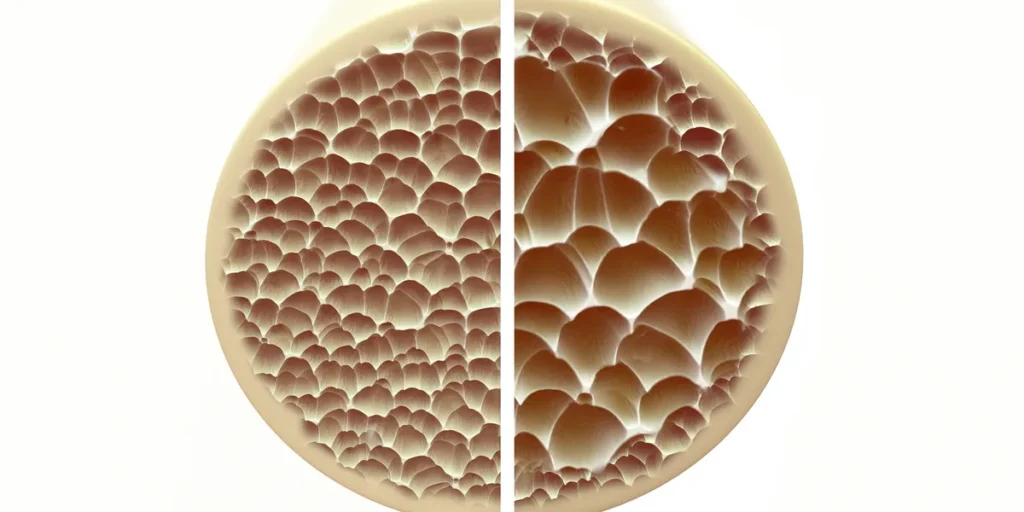
Osteoporosis is a condition that makes your bones weaker and more fragile. The bones become less dense and their inner structure becomes thinner, so they can break more easily than normal.
A typical sign of osteoporosis is a fracture after a minor injury that would not normally break a healthy bone. For example, a bone may break after a simple fall from standing height. Sometimes, a fracture can even happen without any obvious injury.
Our bones are living tissue. Throughout our lives, old bone is continuously removed and replaced by new bone. From childhood to early adulthood, we gradually build up our bones stronger. Then, as we get older, bone loss gradually becomes greater than bone formation. Osteoporosis develops when this bone loss becomes severe enough to make the bones fragile.
Osteoporosis is common, particularly after menopause and in older age. It most often causes fractures of the wrist, hip, and spine. These fractures can cause significant pain and difficulty in everyday activities and may lead to loss of independence. A hip fracture can be particularly serious and may result in major health problems.
The good news is that osteoporosis can often be detected before a fracture occurs and can be treated effectively. With the right treatment and care, much of the damage caused by osteoporosis can be prevented.
Symptoms
Osteoporosis itself is silent. It causes no pain or outward sign until a bone breaks, which is why it is sometimes called a hidden condition. Many people first learn they have it only after a fracture from a minor fall.
Fractures in the spine can occur without a fall and may be missed at first. Over time, several such fractures can cause a gradual loss of height, a stooped upper back, and persistent back pain. Because there are usually no warning symptoms, identifying people at risk and testing them — rather than waiting for a fracture — is central to managing osteoporosis well.
Causes and risk factors
Bone density naturally decreases as we get older. In women, bone loss becomes much faster after menopause because the level of the hormone oestrogen falls. This is why osteoporosis is especially common in older women. Men can also develop osteoporosis, particularly as they get older.
Several other things can increase the risk of osteoporosis. These include:
- Having had a fracture from a minor injury in the past
- A family history of osteoporosis or hip fracture
- Being underweight
- Smoking
- Drinking too much alcohol
- Taking steroid tablets for a long time
Some health conditions can also weaken the bones. These include an overactive thyroid or parathyroid gland, inflammatory rheumatic diseases, coeliac disease, and menopause at a young age. Low calcium or vitamin D levels can also make bones weaker.
Some of these risk factors can be changed or treated. This is an important part of preventing and treating osteoporosis.
Diagnosis
Osteoporosis is usually diagnosed with a DEXA scan. It is a quick and painless test that uses a very small amount of X-ray radiation. The scan usually measures the bones in the hip and spine.
The scan gives a score that compares your bone strength with that of a healthy young adult. This helps doctors determine whether your bone density is normal, slightly reduced, or in the osteoporosis range.
However, the risk of a fracture depends on more than bone density alone. Doctors also consider your age, previous fractures, steroid use, and other risk factors. They may use a fracture-risk calculator to estimate your overall chance of having a fracture.
This information helps doctors decide whether you need treatment to reduce your risk of fractures.
Investigations
The main test is a DEXA bone density scan, which measures how strong and dense your bones are.
Doctors usually also do blood tests. These help find problems that can weaken the bones and check for causes that can be treated. The tests may check calcium, vitamin D, kidney and liver function, and thyroid function. If needed, doctors may also test for conditions such as coeliac disease or hormone problems.
If a spinal fracture is suspected, an X-ray or another type of scan may be done to confirm it.
Sometimes, additional tests are needed to find out why the bones have become weak. This is particularly important in younger people or when the bone loss is more than would normally be expected.
Treatment
The main aim of treatment is to make the bones stronger and prevent fractures. Treatment usually includes healthy lifestyle habits and, when the risk of fracture is high enough, medicines.
Everyone with osteoporosis benefits from enough calcium and vitamin D, regular weight-bearing and muscle-strengthening exercise, stopping smoking, limiting alcohol, and taking steps to prevent falls.
When the risk of fracture is high, medicines that protect the bones can make a big difference. The most commonly used medicines are bisphosphonates. They slow down the loss of bone and can be taken as tablets or given through a drip into a vein.
Other medicines, including some that help build new bone, may be used when the risk of fracture is very high or when bisphosphonates are not suitable.
These treatments can significantly reduce the chance of future fractures. The choice of medicine and how long it should be taken depend on the individual person and are reviewed regularly by the doctor.
Living with osteoporosis
Healthy habits can support the treatment of osteoporosis. Try to eat enough calcium, get enough vitamin D, exercise regularly, avoid smoking, and limit alcohol.
Exercise is especially helpful because it makes your muscles and balance stronger. This can reduce the chance of falling and therefore reduce the risk of fractures.
Making your home safer is also important. Simple steps include keeping rooms well lit, removing loose rugs and cables, using non-slip mats, and installing grab rails where needed.
Regular eye checks are helpful, and your doctor can review any medicines that may cause dizziness or make you more likely to fall.
With the right treatment and these simple precautions, most people with osteoporosis can greatly reduce their risk of fractures and continue to live independently.
Frequently asked questions
Is osteoporosis a normal part of ageing?
Some bone loss is normal with age, but osteoporosis is more than that and raises the risk of fractures. It can be measured with a scan and treated, so it should not be dismissed as just ageing.
Does osteoporosis cause pain?
Osteoporosis itself is usually painless. Pain generally comes from a fracture, such as a broken bone in the spine.
Can I prevent osteoporosis?
You can lower your risk with weight-bearing exercise, enough calcium and vitamin D, not smoking, and limiting alcohol. People at higher risk may also benefit from medicines.
How much calcium and vitamin D do I need?
Most adults benefit from a diet rich in calcium and adequate vitamin D. The right amount varies by person, so ask your doctor whether you need supplements.
References
- The Indian Society for Bone and Mineral Research (ISBMR) Position Statement and Practice Guidelines on Osteoporosis
- Osteoporosis: assessing the risk of fragility fracture (CG146)