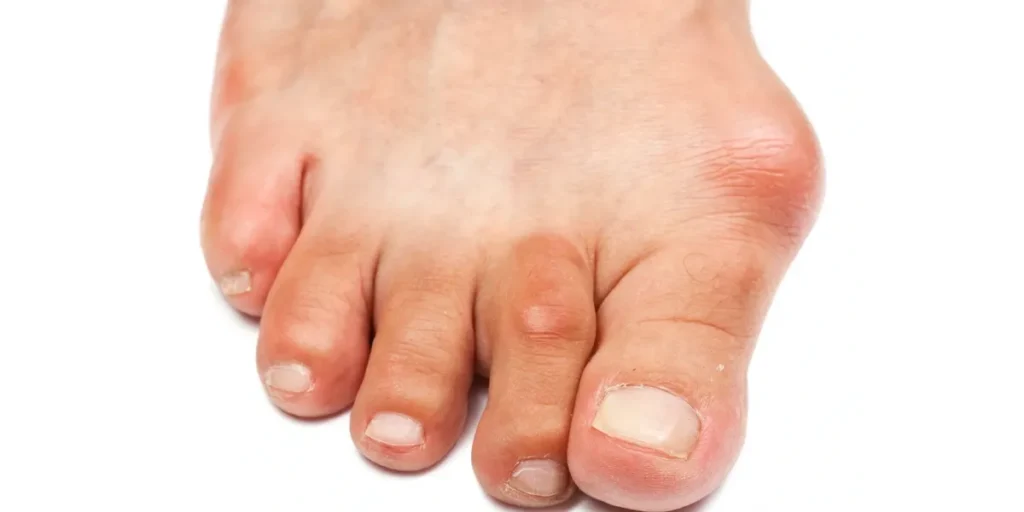
At a glance
- Also known as
- Gouty arthritis
- ICD-10
- M10.9
- Key symptoms
-
- Sudden, severe pain in a joint, often the big toe
- Redness, warmth, and swelling of the joint
- Attacks that often begin at night
- Skin that is shiny and very tender over the joint
- Firm lumps under the skin in long-standing gout (tophi)
Overview
Gout is a common form of inflammatory arthritis caused by tiny crystals of a substance called Uric Acid forming inside a joint. Uric Acid comes from the everyday breakdown of purines, which are found in the body’s own cells and in some foods. When the level of Uric Acid in the blood stays high over time, it can crystallise, and the crystals trigger sudden, intense bouts of joint inflammation known as attacks or flares.
The classic attack affects the base of the big toe, but gout can strike other joints too — the midfoot, ankle, knee, and later the hands. Between attacks many people feel completely well, which can give the false impression that the problem has gone away when in fact the underlying urate is still high.
Gout is important to treat properly because it is one of the few forms of arthritis that can be genuinely controlled and, in effect, cured. Left untreated, it tends to return more often, affect more joints, and cause lasting damage. Treatment of Gout is also important from Cardiac or Neurological point as well, because, uncontrolled gout can increase the risk of stroke and myocardial infarction (heart attack)
Symptoms
A gout attack usually comes on rapidly, often overnight, reaching its peak within a few hours. The affected joint becomes intensely painful, swollen, red, warm, and so tender that even the weight of a bedsheet can be unbearable. The skin over the joint may look shiny and later peel as the attack settles.
An untreated attack typically lasts several days to a couple of weeks and then resolves completely. Over years, if the uric acid remains high, attacks tend to become more frequent and prolonged, and firm lumps of crystals called tophi can build up under the skin around joints, the fingers, or the ears.
Causes and risk factors
Gout develops when the blood Uric Acid level is persistently high, which happens either because the body produces too much uric acid or, more commonly, because the kidneys remove too little. It can be inherited and lifestyle plays an important contributory role in it.
Recognised risk factors include increasing age, being male, excess weight, and kidney disease. Diet plays a part — red meat, shellfish, sugary drinks, and alcohol (especially beer and spirits) can raise urate — but genetics and kidney handling are usually more important, which is why diet alone often cannot control gout. Certain medicines, including some urine increasing tablets (diuretics), can also raise uric acid. Gout is frequently accompanied by high blood pressure, diabetes, and heart and kidney disease, so finding gout is a prompt to check for these as well.
Diagnosis
Gout is often diagnosed from its very typical history and appearance — a rapid, severe attack in the big toe or another lower-limb joint. The most certain way to confirm it, however, is to take a small sample of fluid from the joint and examine it under a microscope for uric acid crystals.
A blood uric acid level supports the diagnosis, but it needs careful interpretation: the level can be normal or even low during an acute attack, so a normal result at that moment does not exclude gout. It is most useful measured once the attack has settled, and for guiding long-term treatment.
Investigations
Investigations may include a blood uric acid level (best checked away from an acute attack), kidney function tests, and, where the diagnosis is uncertain, examination of joint fluid for crystals. Blood sugar, blood pressure, and cholesterol are often checked because of gout’s close links with these conditions.
Ultrasound and specialised CT scanning can show urate deposits and are sometimes used when the diagnosis is unclear or to assess the crystal burden. In long-standing gout, X-rays may reveal joint changes caused by tophi.
Treatment
Treatment has two distinct parts, and understanding the difference between the two is important long term.
- The first goal is to treat the acute attack, to settle pain and inflammation quickly — using an anti-inflammatory medicine, colchicine, or a short course of steroids, chosen to suit the person’s other health conditions. Started early, these bring an attack under control within days.
- The second, and more important for the long term, is urate-lowering treatment. Medicines such as allopurinol or febuxostat steadily lower the blood urate so that existing crystals dissolve and new ones stop forming. The dose is adjusted gradually to reach a target urate level, and once that target is held, attacks stop and tophi shrink.
This treatment is taken every day, long term, even when there is no pain — stopping it is the most common reason gout returns.
Living with gout
Taking uric acid-lowering medicine consistently is the single most effective thing a person can do; when the urate is kept below target, gout can be brought to a complete standstill. Sensible dietary steps support this — moderating alcohol, sugary drinks, red meat and shellfish, and staying well hydrated — but they work alongside medicine rather than replacing it.
Keeping to a healthy weight lowers urate and eases pressure on the joints, and stopping/changing any medicines that raise urate with the doctor can help. Because gout travels with heart, kidney and metabolic disease, looking after blood pressure, blood sugar and cholesterol is part of overall care. With good control, most people with gout become and stay free of attacks.
Frequently asked questions
Is gout caused by diet alone?
Diet plays a part, but gout is mainly about how the body handles uric acid. Some people with careful diets still need medicine, because genes and kidney function also matter.
Should I stop my uric-acid medicine when I feel well?
No. Urate-lowering medicine works by keeping uric acid low all the time. Stopping it when you feel well is the most common reason attacks return.
Can gout damage my joints?
Untreated gout can, over years, damage joints and form lumps called tophi. Good control of uric acid prevents this.
Is gout linked to other health problems?
Gout is often linked with high blood pressure, diabetes, kidney disease, and heart disease, so your doctor may check for these too.
Does a high uric acid level mean I have gout?
Not necessarily. A high uric acid level in the blood is common, and on its own it is not gout. It is called gout only when that high level leads to the typical attacks of joint pain and swelling. A raised uric acid level without any symptoms usually does not need urate-lowering treatment, though your doctor may still look into why it is high.
References
- 2020 American College of Rheumatology Guideline for the Management of Gout
- 2016 updated EULAR evidence-based recommendations for the management of gout
- Gout: diagnosis and management (NG219)