At a glance
- Also known as
- Lupus, SLE
- ICD-10
- M32
- Key symptoms
-
- Joint pain and swelling, often in the hands and wrists
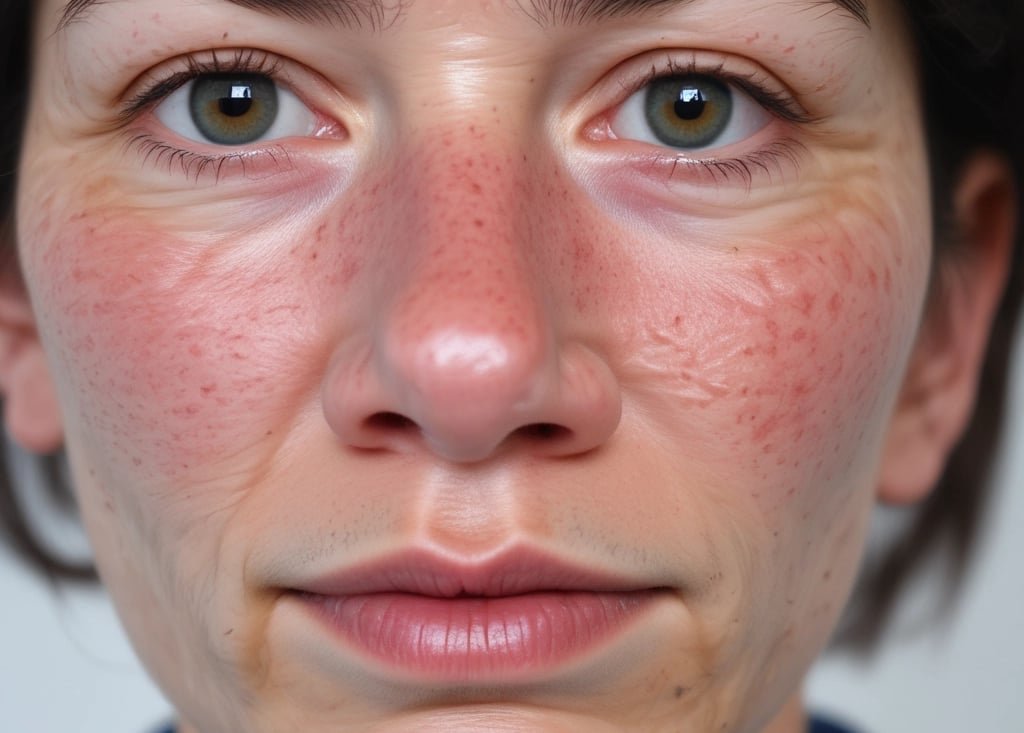
- A rash across the cheeks and nose, sometimes brought on by sunlight
- Persistent tiredness
- Mouth ulcers, usually painless
- Hair thinning
- Fever without an obvious infection
Overview
Systemic lupus erythematosus, usually shortened to lupus or SLE, is a long-term condition in which the immune system attacks the body’s own tissues. “Systemic” means it can involve more than one organ.
Lupus varies more between people than almost any other rheumatic condition. One person may have mainly a rash and joint pain; another may have kidney involvement with few outward signs. This is why two people with the same diagnosis can be given quite different treatment.
It is most often diagnosed in women of childbearing age, though it occurs in men and at any age. Most people with lupus, with treatment and monitoring, live a normal lifespan.
The condition typically alternates between quiet periods and flares. Much of long-term care is about keeping the quiet periods long and catching flares early.
Symptoms
Joint pain and tiredness are the most common symptoms. The joint pain often resembles rheumatoid arthritis but tends to cause less permanent joint damage.
Skin involvement is common — most recognisably a rash across the cheeks and bridge of the nose, sparing the folds beside the nose. Sunlight can bring on both the rash and a general flare. Mouth ulcers, usually painless, and hair thinning also occur.
Because lupus can involve internal organs, symptoms may also come from the kidneys, the lining of the heart or lungs, the blood cells or the nervous system. Kidney involvement in particular can be present with no symptoms at all, which is the reason for regular urine and blood monitoring even when someone feels well.
Causes
The cause is not known. Lupus appears to develop when an inherited susceptibility meets a trigger — sunlight, some infections, and certain medicines are recognised triggers. Hormonal factors are thought to contribute, which may partly explain why it is more common in women.
Lupus is not infectious and cannot be passed from person to person.
Diagnosis
Lupus is diagnosed from the overall picture: symptoms, examination, blood and urine tests, and the pattern over time. There is no single confirmatory test.
Nearly everyone with lupus has a positive antinuclear antibody test, known as ANA. On its own this means little, because a positive ANA is also found in many healthy people. Its usefulness is mainly the other way round — a negative result makes lupus unlikely.
Joint classification criteria from EULAR and the American College of Rheumatology exist and are widely used, but as with other rheumatic diseases they were designed for research consistency rather than for diagnosing an individual.
Diagnosis can take time, because early lupus may show only one or two features. This is frustrating, and it is not a sign that the symptoms are being dismissed.
Investigations
Initial tests usually include ANA and, if positive, more specific antibodies such as anti-dsDNA and anti-Sm. Complement proteins C3 and C4 are often measured, as they tend to fall when the disease is active.
Blood counts can show low white cells, low platelets or anaemia. Urine is checked for protein and blood, which is the main way kidney involvement is detected early. If the urine suggests kidney inflammation, a kidney biopsy may be advised, as treatment depends on what the biopsy shows.
Antiphospholipid antibodies are usually checked, because they affect clotting risk and are important in pregnancy planning.
Monitoring continues after diagnosis, and the tests are repeated at intervals even during quiet periods.
Treatment
Treatment is matched to which organs are involved and how active the disease is.
Hydroxychloroquine is recommended for nearly everyone with lupus unless there is a reason not to take it. It reduces flares, and long-term use is associated with better outcomes. Eye checks are advised periodically during prolonged use.
Steroids control inflammation quickly and are valuable in flares. Current European guidance places clear emphasis on reducing the maintenance dose to as low as possible, and on introducing other immune-suppressing medicines early so that steroids are not relied on long term.
Where the disease is more active or involves major organs, immunosuppressive medicines are used, and biological treatments are an established option. For lupus affecting the kidneys, combination treatment is now recommended.
Which combination is right depends on the organs involved, previous response, and pregnancy plans — several lupus medicines are unsuitable in pregnancy while others are specifically continued through it, so this is worth raising early.
Lifestyle
Sun protection genuinely matters in lupus. Ultraviolet light can trigger both rash and systemic flares, so daily broad-spectrum sunscreen, covering clothing and shade during the middle of the day are part of treatment rather than general advice.
Not smoking is important: smoking worsens cardiovascular risk, which is already raised in lupus, and reduces how well hydroxychloroquine works.
Pacing helps with the fatigue, which is often the symptom people find hardest and which does not always track disease activity. Vaccinations, bone protection, blood pressure and cholesterol are all part of routine lupus care.
Pregnancy in lupus is usually successful but is best planned, ideally during a period of quiet disease and with medication reviewed beforehand.
Frequently asked questions
Is lupus fatal?
For most people today, no. Outcomes have improved substantially, and with treatment and regular monitoring most people with lupus live a normal lifespan. Serious organ involvement, particularly of the kidneys, carries more risk, which is why monitoring continues even when someone feels well.
Can I have children if I have lupus?
Usually yes. Pregnancy in lupus is generally successful, but it is best planned rather than unplanned — ideally when the disease has been quiet for several months, and with medication reviewed in advance, since some lupus medicines are unsuitable in pregnancy and others are deliberately continued.
Does a positive ANA test mean I have lupus?
No. A positive ANA is common in healthy people, particularly at low levels, and by itself does not diagnose lupus. It is more useful in reverse: a negative ANA makes lupus unlikely. The diagnosis depends on symptoms and examination alongside test results.
Why do I need blood and urine tests when I feel well?
Because lupus can affect the kidneys without causing any symptoms until damage is advanced. A routine urine test detects this early, when it is most treatable. This is the main reason monitoring continues during quiet periods.
References
- EULAR recommendations for the management of systemic lupus erythematosus: 2023 update View source (opens in a new tab)
- 2019 European League Against Rheumatism/American College of Rheumatology classification criteria for systemic lupus erythematosus View source (opens in a new tab)